VMware Tanzu/Aria – #CFD18

Kicking off with NAME CHANGES AGAIN! Is this a yearly thing?

I expected to hear about Aria, and instead it’s all Tanzu now. What does it mean!? Well now that Tanzu has control of the lifecycle of cross-cloud services, lets talk a bit about Tanzu Transformer, and migration practices.

Tanzu transformer looks like it lives in Tanzu Hub, hopefully we will find out more about what they will dictate around this solution as well.

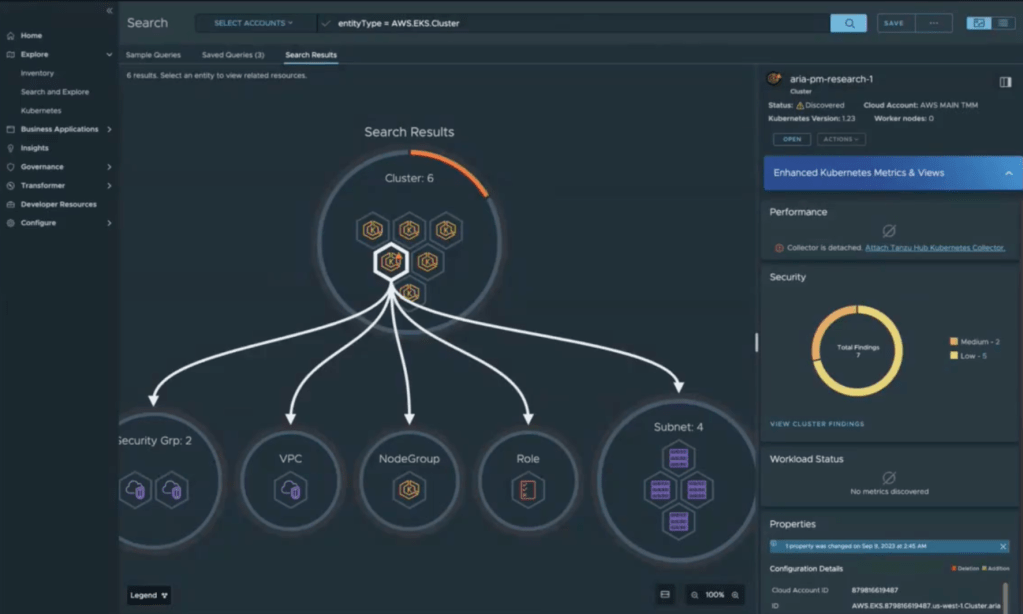
Tanzu Hub looks ominous like Aria Graph

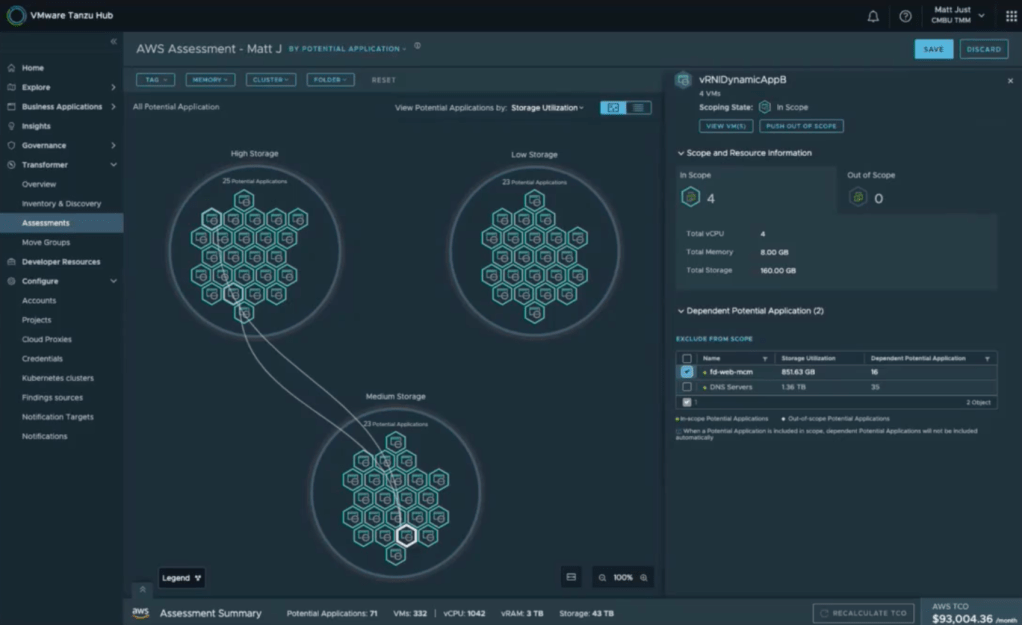
Oh look dependancies! Its worth noting that this is one of the biggest issues when doing a migration because if they don’t move together issues will arise.

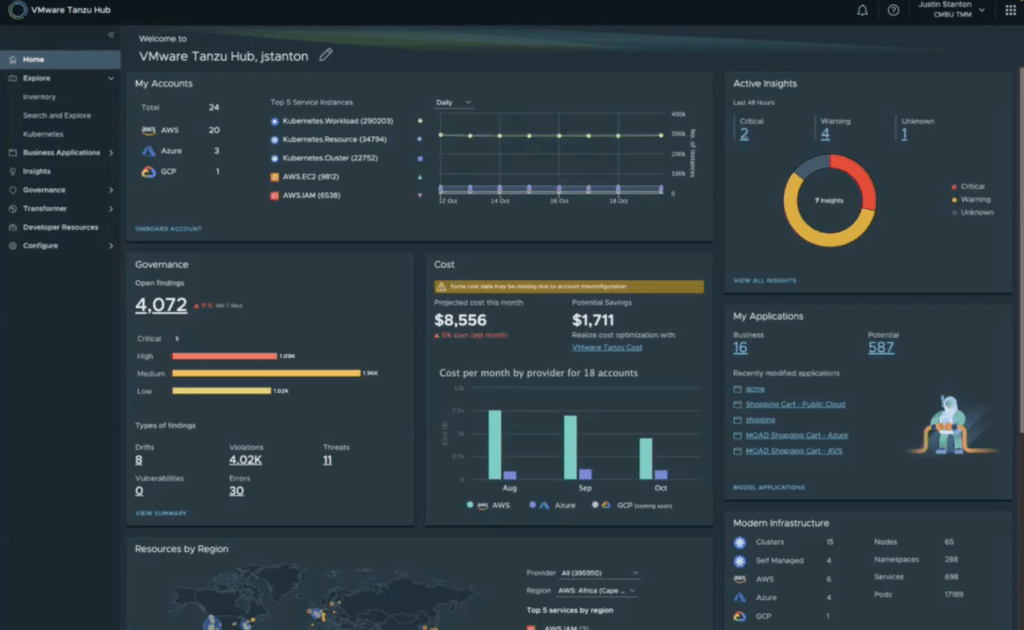
Tanzu Hub! Ok let’s talk about what this new “hub” thing is… or is it just Aria Hub? hmmm… **Confirmed, Its just a rebranding of Aria Hub, to Tanzu Hub**

I have to admit that the solutions ability to see the relationships with Tanzu Hub, and its graph database has always been impressive

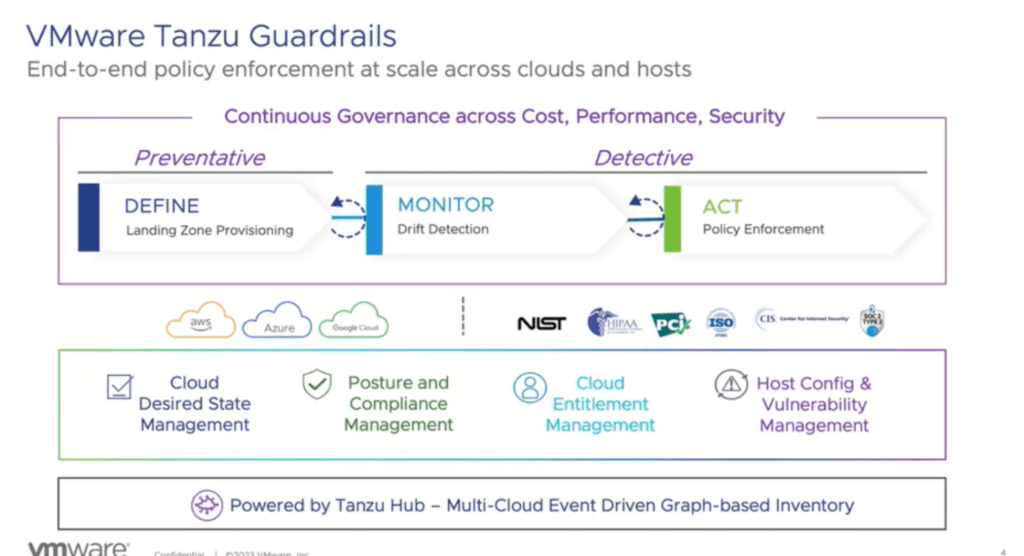
So now let’s talk about Guardrails which came from a small Idem project based off of Salt. Really cool solution to see in our environment.

The understanding behind Guardrails is to maintain compliances and solutions to ensure what is built is kept in a specific way.

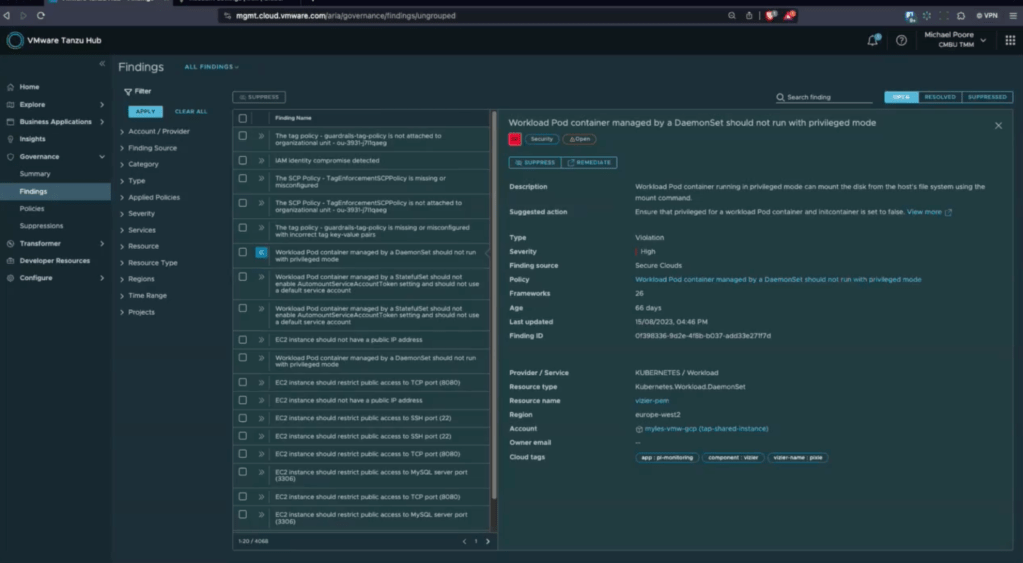
Findings in guardrails are the compliance requirements that are continuously changed and updated, placed against your environment and then bubbles up what needs to be adjusted or changed in order to maintain compliance.

Now to talk about insights, which is really cool but hey FREE TIER!

Insights looks a lot like wavefront which also looks like observability. So it’s like, Log intelligence, plus Aria Operations, then wavefront? It’s a lot of products plugged in together. However it has one of the coolest solutions which is Tanzu Intelligent Assist which showed some amazing ability to query the data for the user

Moving on to Tanzu CloudHealth.

Also major props to TJ for having a sick office, and desktop background.

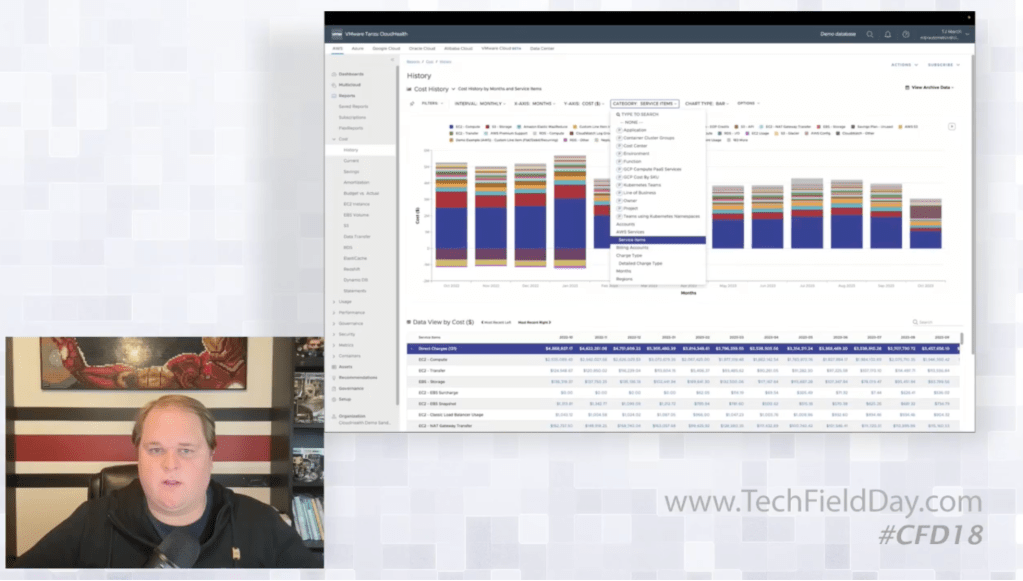
Back to cloud health the demonstration showed us how we are able to find the high cost users and validate what they are doing. This allows organizations to find the higher cost in the environments, and place it against what they should be spending. Also is built in for right-sizing as well as other decisions against what they are billing in the cloud like reserved instances, spot instances, etc.

My thoughts:

VMware has an amazing suite of products to help people that are not in the cloud. The renaming of products has got to stop because at the end of the day we, the customers, are confused what they are actually talking about. The number of times we had to ask where these came from so we could understand if this was a net new product or a rebranding of multiple products was draining. We don’t want to push the narrative that rebranding products should never happen in fact sometimes they absolutely should to show that these new products are either a combination of new products or an addition of new features, but VMware’s at the point where we have gone through the rodeo several times, and we’re numb to it and frustrated and have to ask repeatedly, “Is this new or a rebranding?”

Speaking specifically to the actual services we saw, I am not embellishing to say that I think the suite of combined products are awesome. When we think of VMware we think of their vSphere and vCenter products and the solutions that they provide, but this whole presentation they used the term “cloud” more than they said either of those two products. So Cross-Cloud services are here to stay and I am excited to see where they go. That is, if they go past 10/30 acquisition. Godspeed cross-cloud services!

AMD with #CFD18 – What’s a chip manufacturer doing in a cloud conference?

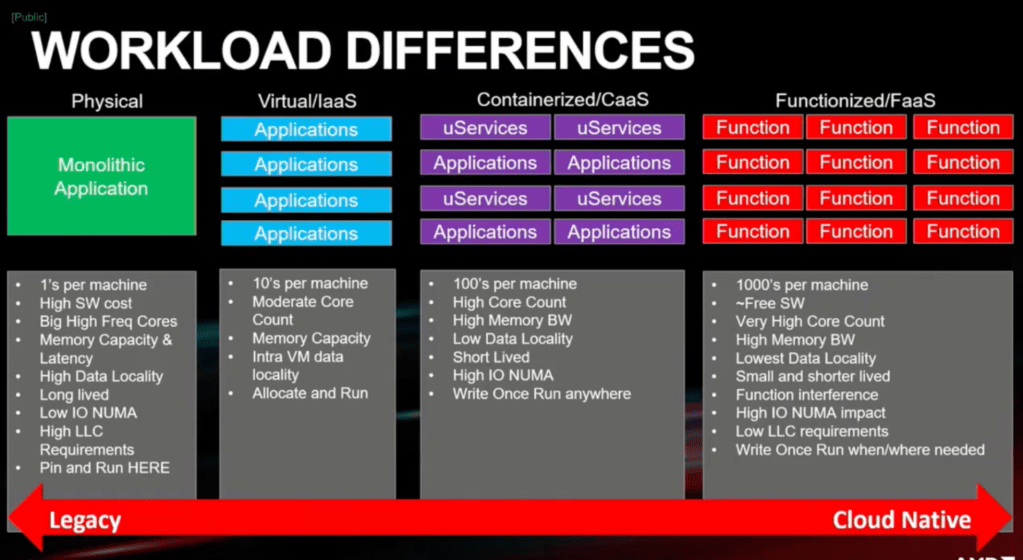
AMD is here to talk about Cloud native solutions, and started with an understanding of what it truly is. With it being application deployment at a faster speed. With a slide like this I don’t care what the company is building, I want to know more about what they what to say:

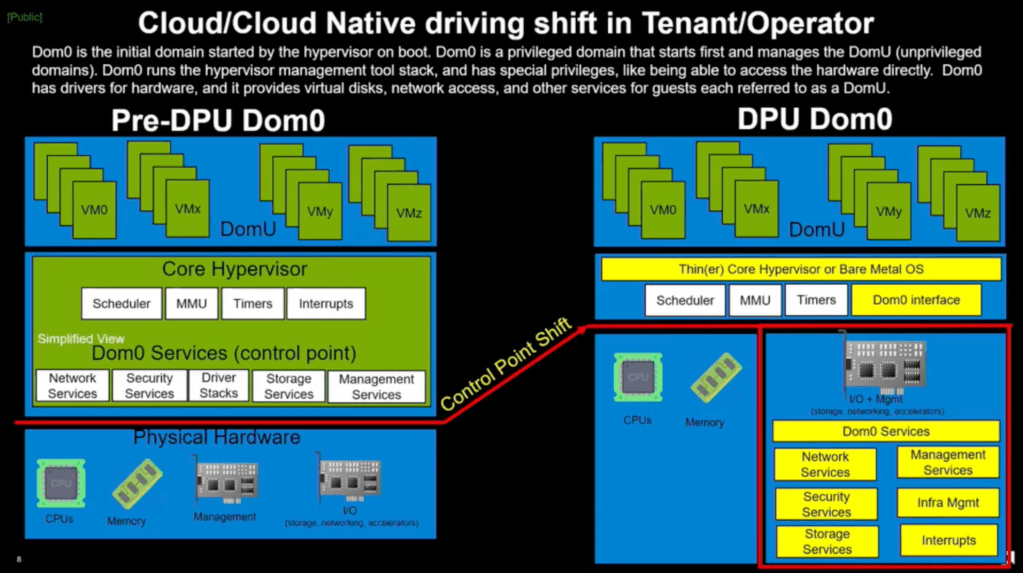
Within the cloud there is a tenant operator distinction where the tenant is a consumer of the cloud and the operator is who runs the cloud. One thing that AMD is seeing is operators wanting to move their running solutions within a DPU(Data processing unit) and not within the main solutions of the computer.

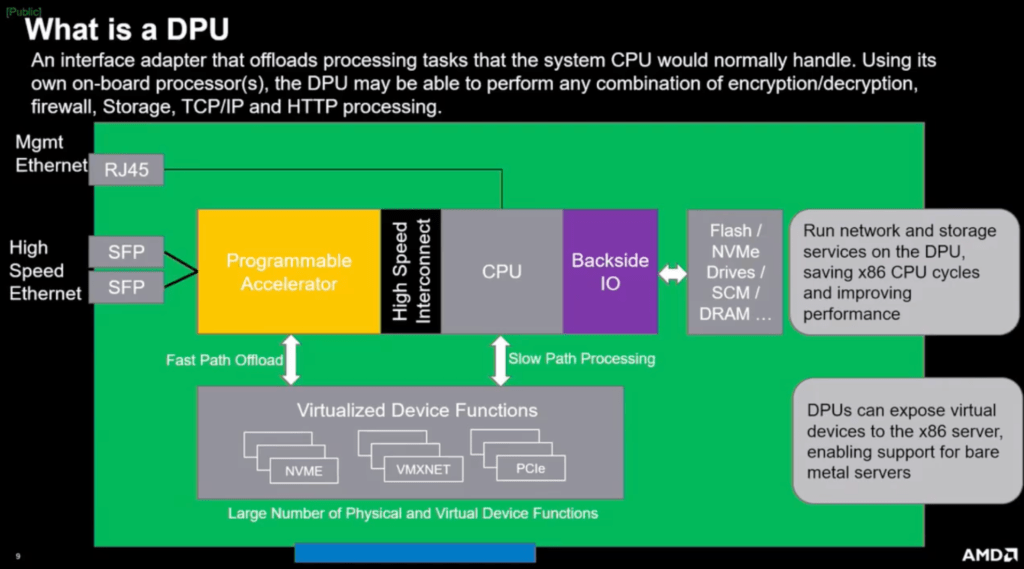
Probably the best slide I’ve seen on a DPU and what it looks like:

While AMD continued to discuss their value and what they are able to do with multiple use cases, I can’t help but wonder why this matters. Why does AMD want to tell us about their usage in the cloud, when hyperscalers decide how the hardware is used. Shouldn’t chip manufacturers be talking to the actual providers within the cloud, and not the customers?

My perspective may be a little askew as it comes from an AWS perspective. When talking to AMD or Intel at RE:Invent I always like to ask what they bring to the customer at those events, and I always hear the same thing, “NEW AMI’s!”. Excuse my insane eye roll, but the increase of different images or shapes, or however you want to define them is just unnecessary and annoying. It should be basically simple. VMware does it all the time with how it defines the amount of vCPU and RAM to each virtual machine that is built. My petty annoyances aside, if you were to do a quick google search on AMD and *Insert Hyperscaler* you would find out that the way AMD is utilized is widely varied between the different clouds you are using. For instance Oracle(OCI) utilizes AMD with high cpu and utilization while allowing it to build additional resources, which is a big deal when you think about how many GPU, and HPC resources can be utilized rather than upscaling to a single level and keeping it at a lower ratio of usage. Azure is using AMD for HPC and other solutions as well including dedicated solutions to really take advantage of AMDs chips.

The truth is, if you look at CPU vendors and you only know one cloud provider then you may be missing a very large amount of what that chip manufacturer is doing, and how that will impact the world. I don’t think it’s an embellishment to state the impact on the world. With the ways we are creating the silicon, the different power consumption due to different cores being utilized, and on top of all of this the idea of Moores law being dead and what that means. So things get more expensive, that’s agreed upon, but what about power consumption? Do the other chip manufacturers that are making chips with lower power consumption and with an understanding of how they actually should be built take a backseat because of the flash and power of high consumption solutions that literally no one uses!?

In conclusion of this rant of a post. We as the customer need to do our due diligence to pay attention to what chip manufacturers are doing. Team green(Nvidia) definitely gets the limelight(pun intended) when discussing power and the insane about of throughput it can provide, but at what cost?? Team blue(Intel) is building chips but is constantly put up against team red(AMD) and AMD is doing things correctly thinking through how everything should be done to provide caring for the world and the chips being produced, and continue to be put on the back burner outside of the high CPU requirements. Though we heard more and more about the chips that AMD created, and it didn’t really talk through how it impacts the cloud directly, I couldn’t help but go off the rails and discuss how these things truly matter as we progress in this journey we call life.

Prosimo – How Multi-Cloud Networking Should Work – CFD18

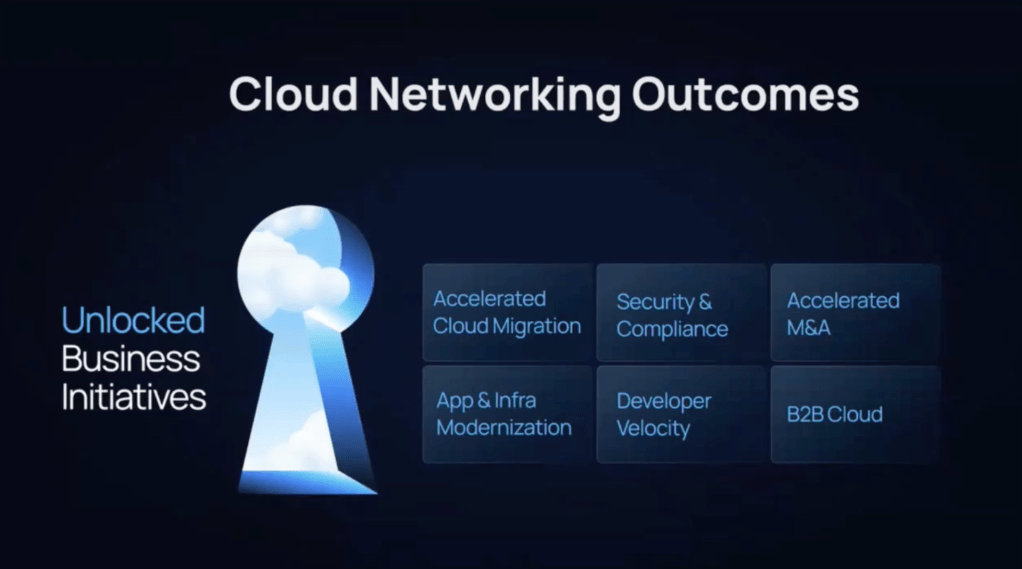
multiple different networking tools exist in all clouds expanding multi-cloud multiplicatively. With all the different tools it creates complexity but even more than that. When a simple VPC connects to another VPC it creates the need for a hub and spoke configuration, but what about endpoints? What about other solutions that are public facing but your no longer public?

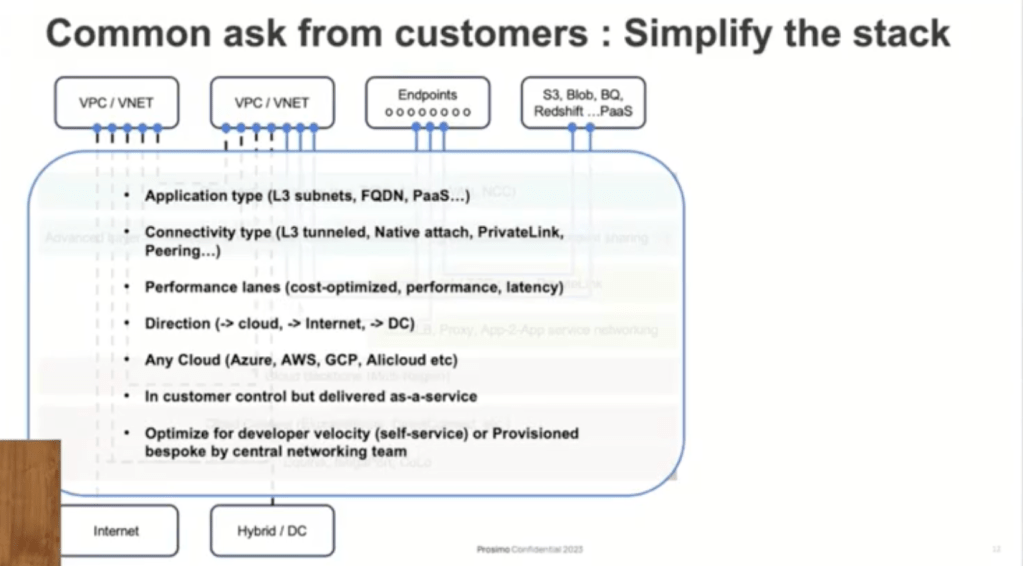
Prosimo is looking to simplify the stack when it comes down to set up the different networking and allowing the networking solutions to connect to another different area. From a high level Prosimo is looking to fix issues that customers are running into which flow from this problem of cloud networking.

Demo Time!

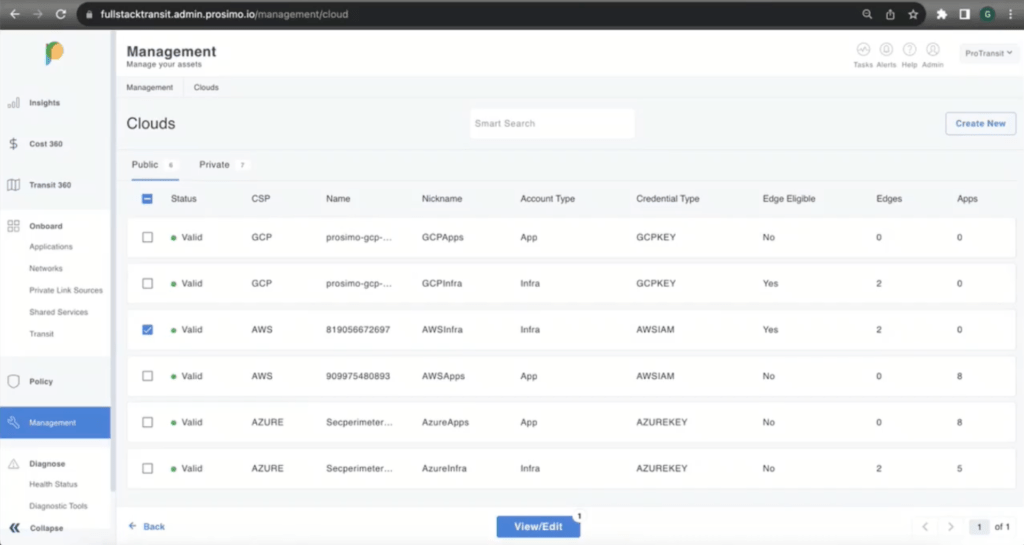
Here is what Prosimo looks like:

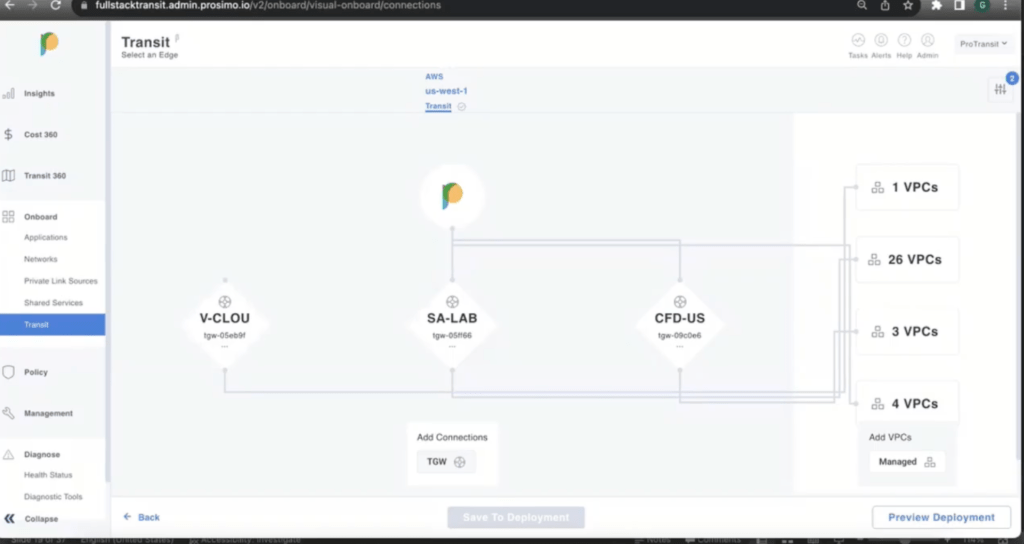
What networking with VPCs, and other AWS networking components would look like in Prosimo

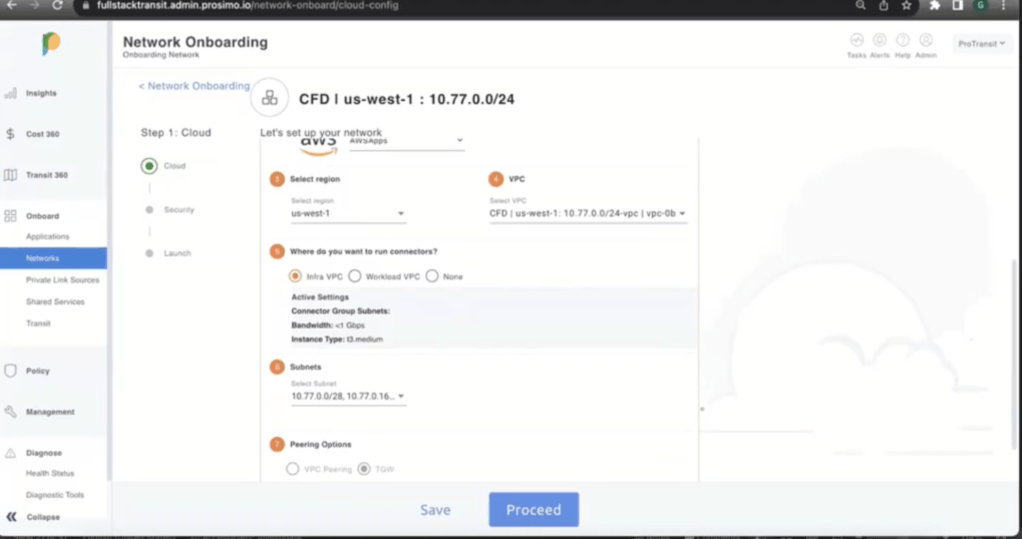
Network onboarding:

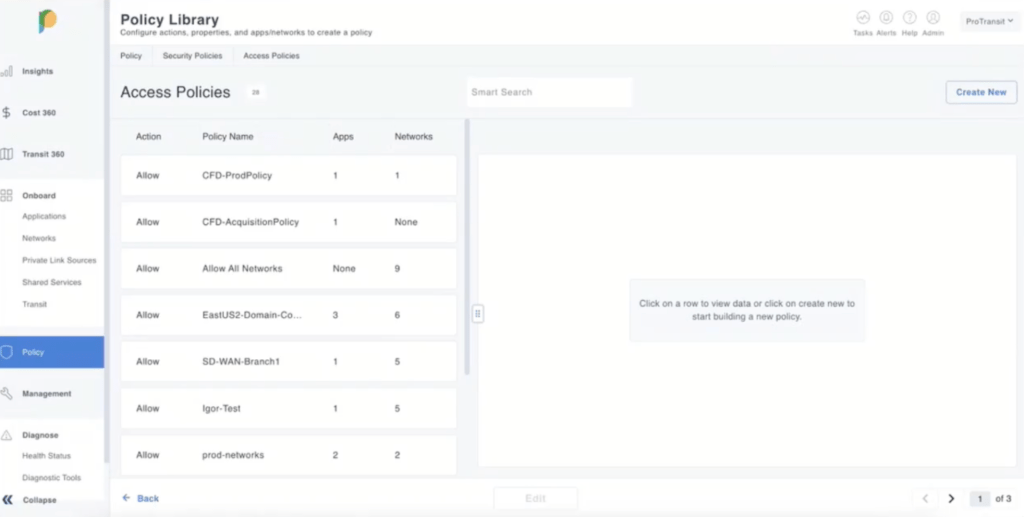
Security Policies

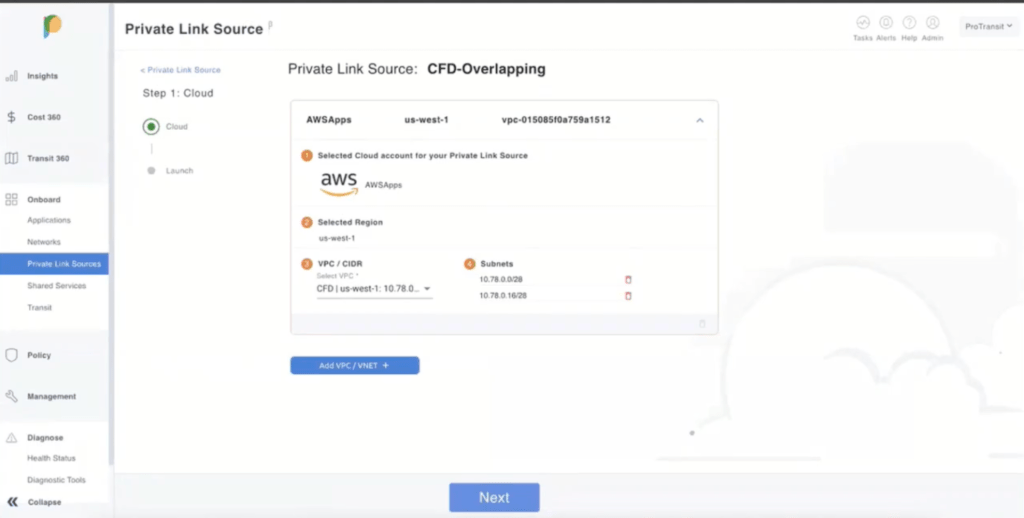
Private Link sources for utilization with Prosimo

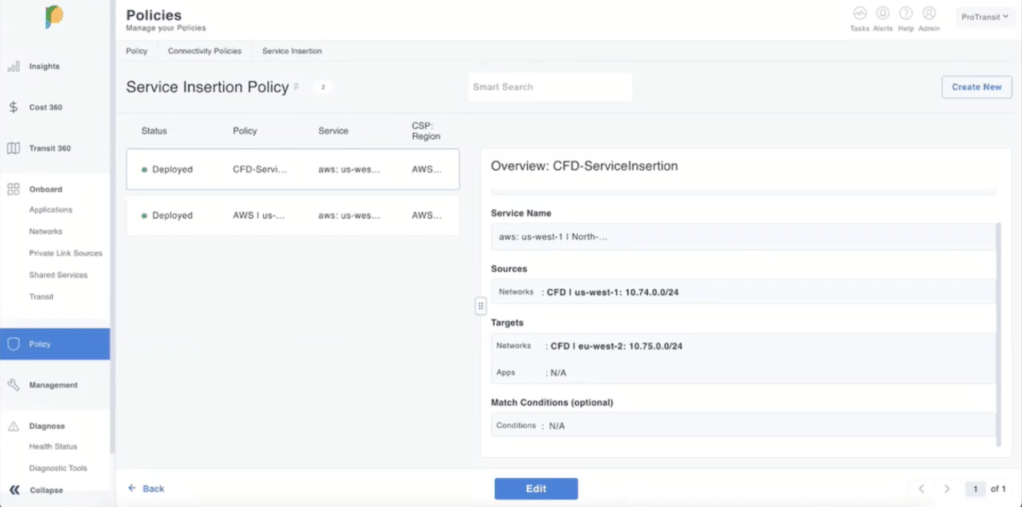
Service Insertion Policy:

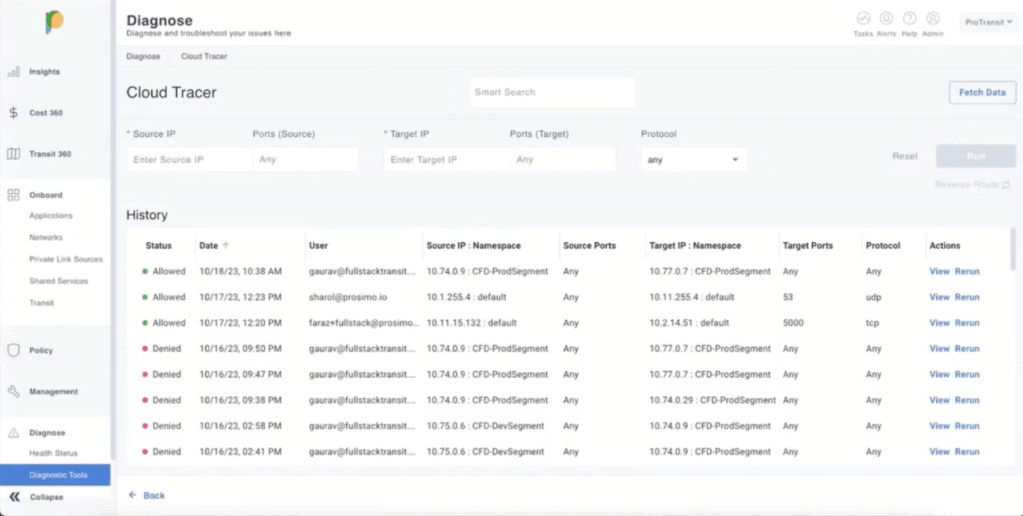
Cloud Tracer: Because validating that your networking will work, or not work is kinda a big deal

Cloud Pricing 360

My Thoughts:

This is my third time hearing from Prosimo, the first presentation was when they were still relatively new to the street. Even then I saw the wonder of what this solution could provide. The key pain point that it’s targeting is an easy one. Customers do not like having to deal with complex networks that cannot be understood because they cannot be touched. With the move to the cloud these networks are more software than anything else. Wouldn’t it be great if there was a solution that was built, created a mesh, and was able to flow the traffic between clouds, and between services that don’t have IP addresses? Absolutely. Prosimo even showed the extension from an AWS subnet being able to login to a postgresql database in Azure. Mind blowing.

Prosimo has even thought about networking changes within the cloud. While a lot of customers are dealing with cloud changes like a dev/test solution, Prosimo takes it to the enterprise and allows their users to build attachments but then create maps, and documents to then be taken to their CAB(Change Advisory Board) groups. If you are interested in learning more about Prosimo you can try it out at https://prosimo.io/cns/

Third time is definitely the charm with Prosimo. Now with the expansion of cloud services including the solutions outside normal IP networking within the cloud (like lambda, RDS, etc.) Prosimo defiantly plants their flag on the cloud landscape with their solution.

Mezmo – #CFD18

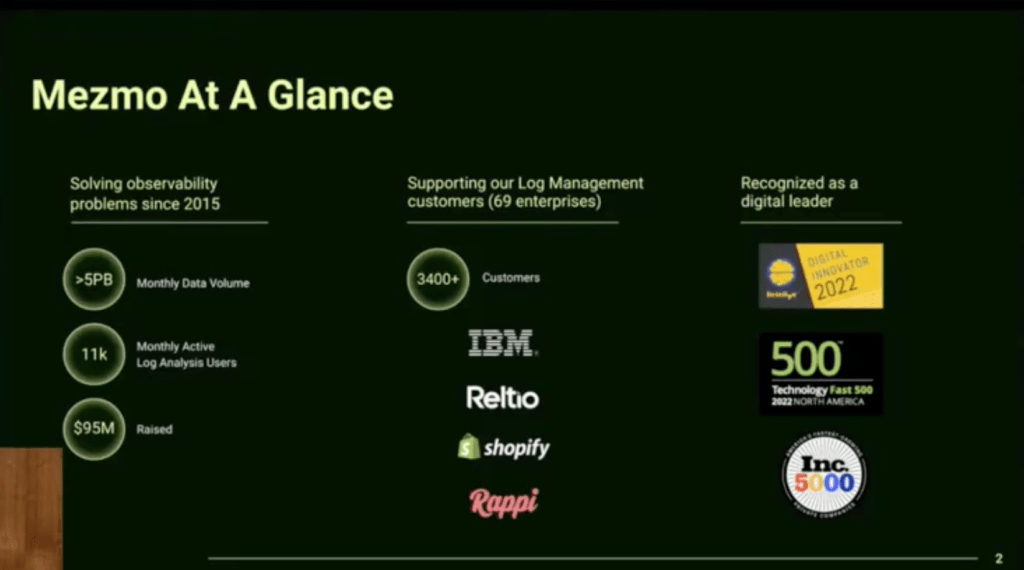
An introduction to a new company and this one is called Mezmo, what what does this group really want to talk about? Well how about Telemetry and observability? First thing that would be discussed about Mezmo is that they have been around for a while. They were originally LogDNA and are now Mezmo and have been utilized for observability and telemetry for IBM for a long time:

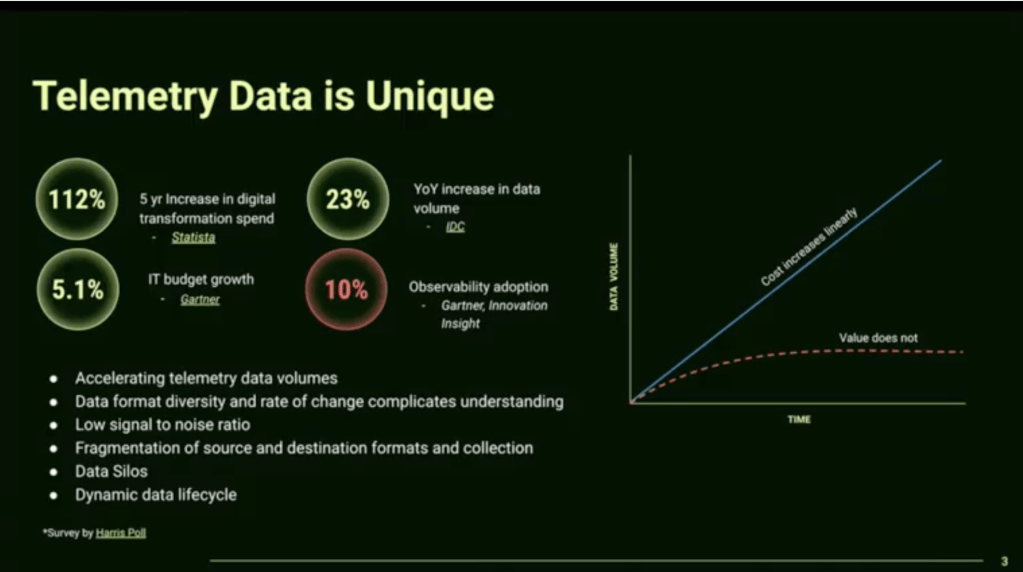
Now telemetry data has a value but that value does not grow in the same amount as the linearly data of the telemetry consumption. So there is a gap between the value and the data.

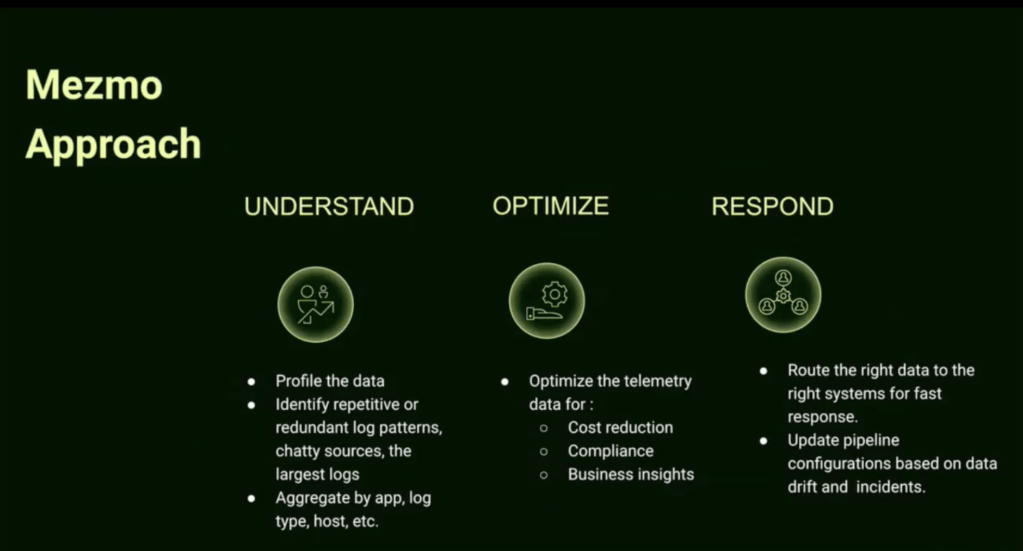
Introducing Telemetry pipeline with Mezmo:

Top use cases for telemetry pipeline:

However the main goal of MezMo is to help you understand your data and have a deeper understanding of where your data is going and what it is doing. This is difficult for most organizations because data is specific to the use-case and they only use specific data for specific things without cross relationships between different use cases. Here is where Mezmo changes the game and compliments multiple providers under one umbrella:

Ok, so we know a bit about Mezmo, its demo time!

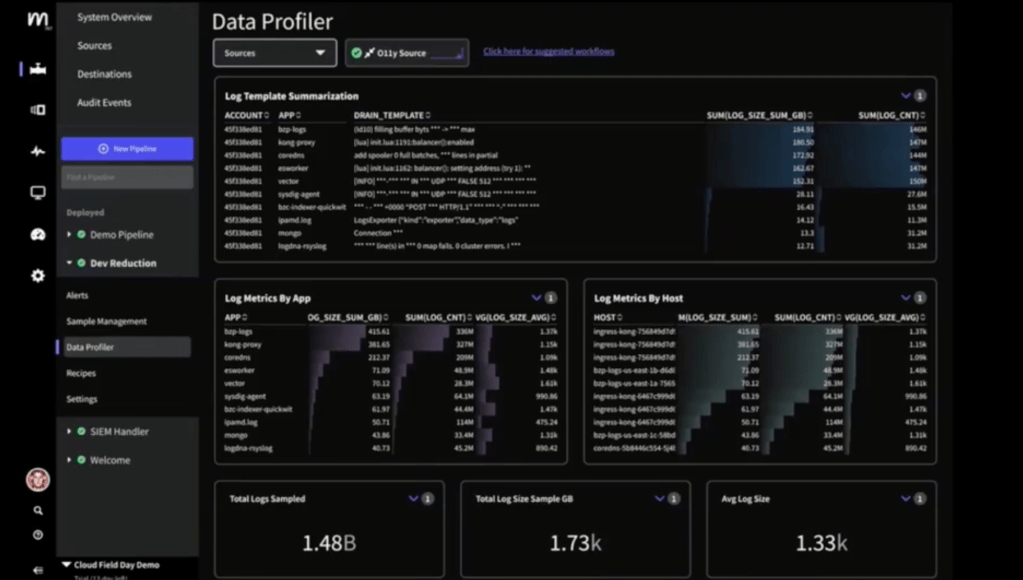
Looking at the data profiler we see the data coming through different integrations with Mezmo.

After validating where the data is coming from, they are able to parse between multiple different sources of data and validate what data should be needed and available for the different reasons.

My Thoughts:

I’m not big on telemetry but this is the second time I have heard a talk today at cloud field day, on the second group. So I’d say knowing where the data should be going, and how it should be consumed, pared down etc. Will continue to be a discussion. It’s good to hear that a large amount of this will be ran by Terraform because it allows users the ability to automate and orchestrate the solution from the ground up. This helps users understand the blocks of each part of the solution and have a better way to validate how they would be connected within their architecture. One thing I did not bring up was they have the ability to swap over to an “Incident” mode and start looking at debug logs so they can validate what happened, and why it happened. This is a really nice feature as it allows customers to validate the issue and fix it rather quickly. The last thought which is a small thing but really nice is the UI looks very clean and easy to utilize to track down the logs and pare it down to what you want to utilize. Good first viewing of Mezmo.

Juniper – Being an operations superhero – #CFD18

So in the first two talks from Juniper we discussed building a network via automation, and the second was on AI cluster creation and the networking issues that came from that. Now our discussion is around operations analytics and what Apstra does in order to help operations to understand what is happening and what should be happening.

First thing needed via operations within Apstra, is to identify the source of the data. We were able to see here where they are able to utilize the gui to open a cli to run commands and find errors within the network.

Once the source of the data is found and is built, then you can build an IBA probe to reference your area of telemetry. This is utilizing a graph database and is able to validate data within the data in other areas. For more information about a graph database look here: https://aws.amazon.com/nosql/graph/

Because you are pulling data, injecting it into a graph database you are then able to leverage graph to tell you more about what is happening in the whole solution. If you click the link about the graph database you would find out that this is basically leveraging the way Graph works with the data that you are pulling.

Once the data has gone through this journey it’s then presented to a dashboard in order to consume the data visually. This is the core component from this solution because it generates the data that you want to generate, and the display it fully for folks to see in order to consume the data was you would like.

Finally, flow data can be utilized in order to connect and utilize the consumption via s-flow, net flow data. This deploys the flow through the pipes and then reports back what the packet data would look like through the data.

Thoughts:

This seems like a really good Data Analytics solution to help customers of Apstra to be able to see the data that they need to validate and understand. This also can be utilized for analytics to things that are broken and things that need to be adjusted. I see this a lot when we talk about solutions like Aria Operations and the solutions that it presents because it’s utilized for that dashboard. However, this is more in-line with Aria Graph as it pulls in data via the graph relationships and builds an understanding of what is running and what is related to another resource. Its really cool how this can be build and grown for customers and very interesting how Apstra is using it.

Juniper – building AI Clusters

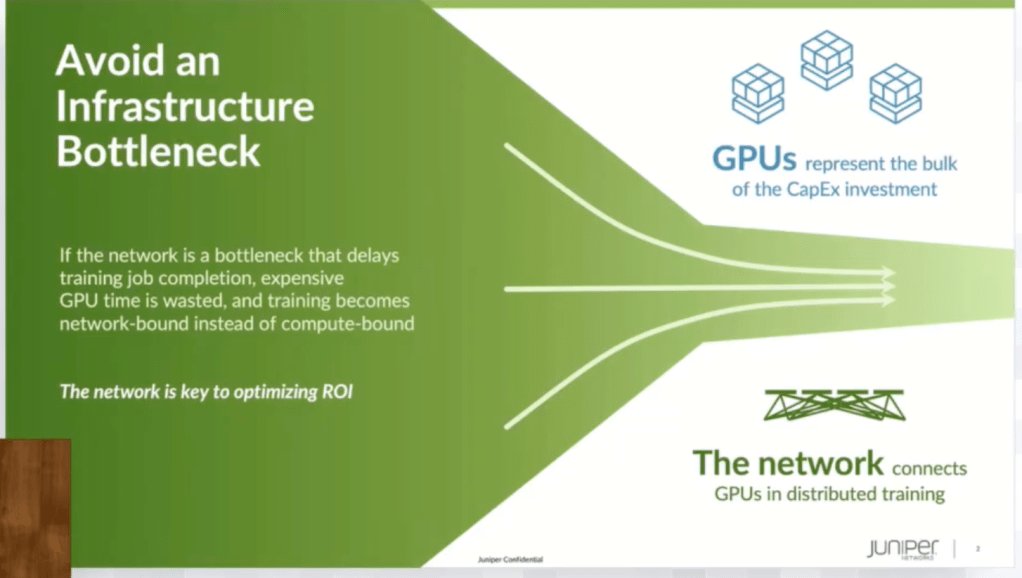
AI is spending large amounts of funds for AI deployments, and AI is a bottleneck to completing AI jobs. Juniper wants to push this back to being compute bound.

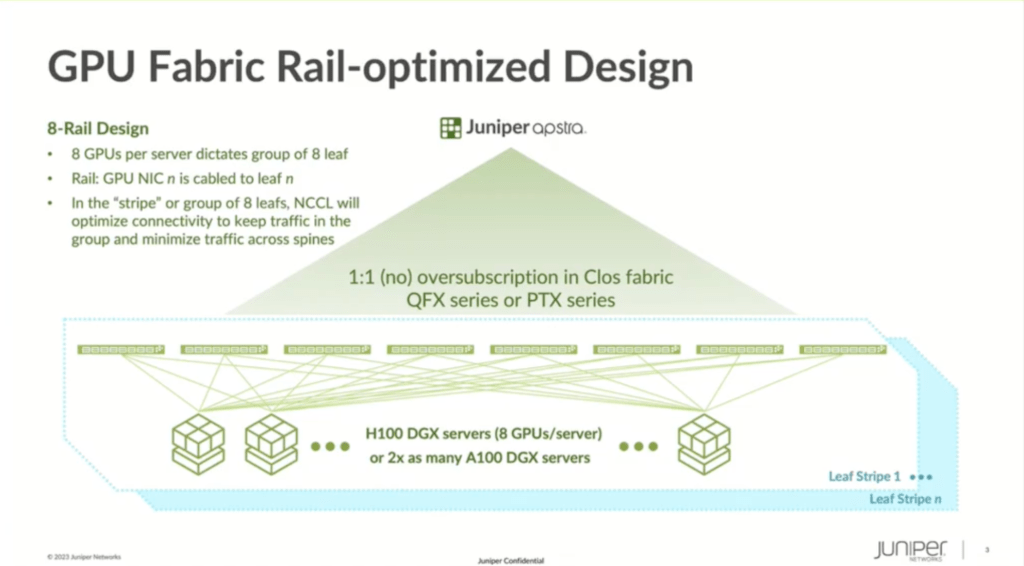
Each GPU has its own 400G NIC! I cannot even fathom that amount of networking.

GPU fabric Rail-optimized Design:

https://cloudlabs.apstra.com in order to find and do the demonstrations that Juniper showed. You do not need any hardware or connections to run through the demonstrations.

Juniper Networks IaC Apstra – #CFD18

What is this about?

Automating the datacenter as if you were automating the cloud! Juniper Apstra is able to drop itself into the networking side of things in order to orchestrate the network. Apstra has the ability to build the network from OOB to the different subnets and networks that are used. Using Terraform you can build a declarative state that can be validated via Apstra.

Why does this matter?

According to Gartner in order to succeed at digital transformation you would need to automate and transform your network. With these solutions you are able to build networks including full spine and leaf networks in order to deploy all of the solutions.

What it does!

Using Terraform, the demonstration will show orchestration from Apstra, including some linux VMs, some OOB networks. Apstra is able to speak to the OOB networks so it should be able to talk to everything that is within the datacenter. It’s good to keep in mind that a blueprint in Apstra is an already built environment or as some would think of it as a deployment. After the code is deployed then you would have your blueprint. Within the demonstration what we were able to see was an intent being created via Terraform, and then the deployment of spine leaf, as well as application deployment and then moving the load balancer into AWS which was absolutely insane!

Github for the demonstration found here!:

https://github.com/chrismarget-j/cfd18

A DevOps Mindset

So you wanna do DevOps, well here is a take from a guy who has never been in a DevOps role, and has never utilized DevOps practices in an environment, and lets face it, I really have no idea what “Modern DevOps” is. In fact, I hate the notion of “DevOps” as a snapshot of any time period, and I also hate adding security to a pipeline and thus changing the naming to “DevSecOps” so you can get compliance and security environments into the mix with product advertisements and targeting different areas that have been labeled “Ill-equipped” for DevOps. Lemme level set something. DevOps works everywhere, because its not tied to a tool, or an environment. DevOps isn’t about tools, and its certainly not about fitting it into an environment. What it is, is a singularity inside an individual to fix problems outside of your role. Probably this will come across as inflammatory statement, and I may have already lost my readers, but if your still here, and want me to try to backup my wild accusations hear me out.

DevOps, as we all know, is a monniker of developers and operations to work together. For me, in order for DevOps to do this it needs to fill in the gaps in a business and move to a end state that enables data flows, automation, and documentation across roles. This means the Developer has some understanding of operations, and it means that the operator has some understanding of the developer. Now, I’m not saying that the end goal is to “cross the streams” of the roles, but rather to communicate, and care for each other.

I mentioned how I have not been a part of multiple DevOps roles, or areas, but I have seen DevOps fail multiple times repeatedly. I’ve also spoken to customers who state they are, “DevOps” because they utilize a CI/CD tool. Would it surprise you that I met a customer who uses Terraform, Ci/CD pipelines through AWS services, and utilizes all infrastructure as software defined, but they still had an application outage for over 8 hours. What is missing? They are using all the DevOps tools that need to be running right?

By now you can guess the whole point of this blog is probably not about the toolset to help enable DevOps. Those are great, but they are not the whole point. The point of DevOps is the mindset. The mindset that you have will help you understand if you truly are a DevOps minded individual, or if you should focus more on a specialty that allows you to work in your world and not touch others.

First. What is your role? (This is a trick question) Can you guess? In my opinion, your role is to help provide a service for the business that writes your checks. So the 2nd question gets easier. Who is your customers? Notice the question is plural. If your role is to help the business then the customer is… everyone in the business? Well no, because then you wouldn’t get anything done. Besides you wouldn’t be able to talk to everyone in the day. No your customers are the closest individuals that you are allowed to work with. Now you may not have access to developers, or accounting, marketing etc. but you may have access to an SRE and someone that is blended into your group. This is where you find where you can “help” and grow in that area. Where I see DevOps work, is where people talk to each other, define action items and who can take them. Then execute on those action items that will then lead to new discussions and new action items.

This is where the SRE teams come in. To me SRE teams are silly, as they are a construct created so grumpy people don’t have to work with others, and so they created a role specifically to play intercession for each role. However, that being said, it works. SRE works between the groups and they get things done. However, the SRE guy normally works with the mindset of bridging the gap. If the operator had that same perspective, wouldn’t they connect with the other groups?

I’ll give another perspective to what DevOps is. Imagine a startup company with 5 individuals. At this stage, you don’t have a C-suite of people working just to build the business. At this point you just have the people that build the application that does the service consumers will purchase. Notice the separators here? Everyone has the same role. Build the app. Now each team member may have a specialty in an area, but they wont have the ability to say, “That’s not my job”. The goal here is to keep pushing the stone up the hill together, everyone has the same direction and the same end goal. There is no sideline goals.

In fact, saying “That’s not my job” defines a non-devops mindset. A more Devops minded individual would say something like, “I’m not skilled for that” or “I don’t see how I can execute on that in a timely manner”. Its not that its a solid “Not my problem” type answer, its that the way they are going to fix the problem is off target, and thus needs to be adjusted. DevOps doesn’t work very well in hard rules where people can be forced to do things. Instead it needs to be setup with the possibility of “Can you do this?” and the answer back would be more of a “I don’t think I can execute that because X”. Its a different perspective.

Just some of my musings around the idea of DevOps. Mainly because I’m tired of people using 1 “DevOps” tool and say they are a “DevOps” shop. I’m a grumpy DevOps guy. Its about the mindset, not the tool. #EndRant

A Practice of Learning

If I was looking in my history and wanted to find what made the biggest impact it would be the creation of a practice of learning. Creating a practice of learning is very simple, in concept, but extremely difficult in its actuality. In my own life there have been days where I study and learn for hours, and days when I physically get sick with the idea of learning anything. Regardless of those bad days when I learn nothing and the good days, there remains the practice of learning.

“Practice” isn’t a word taken lightly here, as its more around the musically talented fields than IT. Practice in these fields is the arduous amount of time spent doing scales, or performing pieces of music at half or even quarter tempo so its so slow that you can conceive of what your doing, what you should be doing, and where to go next. So eventually, once you are at tempo, you perform the piece as it should be played. This is where the practice is more in-tune to Learning, than simply studying for a test, or getting “better” at your career. For me I break up this practice in a couple ways, It starts with understanding your learning schema, then the subject to learn(this isn’t the first step btw), then when you want to dedicate yourself to learn. I’m standing on the shoulders of giants in this blog, as there are many on this subject that have impacted my life, but this perspective is what works for me, and may not fit 100% of what you should do. However, just starting and learning what fits is the whole point here. Don’t mimic me, find out what works for you. If mimicking works for you, that’s fine, do that then, but do what works.

How Do you Learn

Everything starts here. Understand thyself. Know what works for you. For instance, I and NOT a book reader. I learned this about myself when I had to read Dutch reformers for Seminary. Trying to conceive things from either badly translated books, or badly written will really tell you how bad you are at learning from books. Now this isn’t an excuse, and DOESN’T mean I hate reading. It just means that if I want to fully understand something RTFM doesn’t work for me(It definitely does for others). In my mind breaking down different learning schema are things like, Audible learning, Visual Learning, and Mental Learning. There are nuances with each and I’d suggest everyone dig into each to find out what really works for you. I’m a visual/audible learner, this means I learn best in class. I am present I listen and I try to ask questions. It’s where I thrive, but this isn’t for everyone. I know some that are mental learners, and these folks are those bookworms that read things and just get it from the reading. I envy these folks sooo much, because the amount of technical writing out there far outweighs the amount of visual, and audible learning. Plus its pretty obvious to say that books can be cheaper than classroom teaching. A book is around 50-100$ where a classroom is around 1k-5k$. Lots of nuances here again, but the point stands that those that learn in books are in a good place to practice learning.

What Can you Learn

Stop for a second and think about what you are good at. What makes you smile when you think of that one time you did that one thing that changed the organization, or the big play that changed the game, or that one thing that made people notice. Whatever it is, its a good indicator of what you are good at. Look at your resume, and see the biggest bullet points that make you think, “Wow, I forgot I did that.”

These are all great indicators of what you already know. This is important because growing from what you know leads you into new avenues for learning. For instance, someone that knows AI/ML solutions on-premises, can learn it in cloud. Someone that knows how to swing a bat, can swing a golf club. Someone that knows how to play piano can play guitar. Someone that knows English can read Spanish. Notice what I’m saying here. “Learning” starts with skills that can move from one thing to the next. Can a person that swings a bat swing a gold club? Not well. Especially, those that know how to read English when reading Spanish. Can you “read” it. Maybe… but you definitely don’t conceive of what you are saying, and you won’t do it well. This is where your learning starts. Its taking something that you know partially, and growing. I’m sure many a person takes a look at golf and thinks, “I’ll never learn that”, or someone looking to learn a new language thinks, “Man that’s a whole different thing.” to that I’d argue that your not starting from scratch but growing in something you already know. When you look at it from this perspective, things seem much more achievable, which in term they are if you put in the time to achieve them.

Now there are things that are completely different when learning them. I personally see Networking in IT as something I just don’t get. I know I can learn it eventually, but its something that I’d have to “start from scratch” to learn. Is it? Do you, dear reader, think its something from scratch? or do you think I know more about it than I think. This is where those “Ah Ha!” moments come from that bridge the “I’ll never learn that” to “I think I get it” and fundamentally shift the viewing of a topic to something that can be achieved. Again, this isn’t easy, and it takes time. Things that you desire always seem to take the most amount of time. There aren’t that many, “Get what you want and get it now” schemes that really work. So sometimes you got to just get after it and really make a determined promise to yourself that you will not give up on it till you know it.

When do you Learn

Here I want to bring up a couple points. First you are a sponge. In that you can only know so much. That amount of knowledge will take over other things in your life, such as recreational thinking, hobbies, etc. and vice versa. When you view your mind as a spunge it helps you understand the importance of what you are learning. Is it worth it to know all those sports things? It may be! It certainly helps having conversations with folks that are “sporty” and I’d say the same thing about current events, and culture. I am by no means saying stop doing things that are fun and only focus on boring things. That’s not how life works. I’m saying to not forget about the boring things, because the folks that know it and grow in it can fundamentally shift how the world works, and that person could be you.

What I am saying, is once you know how you learn, and what you want to learn, you then need to put it into practice and start learning it. Create a season of learning where for a quarter, or 6 months, or a year you focus in one area. That’s your learning season. During that time your periods of learning are focused in that area and its “sister topics” of different things. This keeps you focused, helps you to hone your skillsets, and also allows you to us different mental learning capabilities as you go through your periods of learning.

Periods of learnings, in my mind, are the hours, two hours, or however you set it up, of learning that you do in a regular cadence. This is the sitting down and starting up a new video of a topic, or reading a book on the topic etc. I’m one of those people that needs to set apart a time for doing it, or else I won’t do it. For me, I do it in the mornings. Before I start my day I dedicate some time to learn something new, then after my learning, I start my day with a jumpstarted mentality to achieve what I need to. Each day starts with what I want to learn, and what I want to achieve. This also allows me to grow in my career and impacts my job, my family life, and my friends as I am able to conceive of things a little easier and walk through topics. What time would work for you? Is it at the end of the day? Maybe the learning lunch hour? Everyone is different the main principle here is to find the best time and stick with it.

Conclusion

If you have had a hard time trying to keep up with my ramblings let me try to put this in the easiest terms possible. First, find out how you learn. Different people learn things differently. Find out what works for you, stick with it after you figure it out. Only stretch your learning technique on things that you are refreshing. In other words, if you learned everything about AWS CloudWatch, or Coding a function, or swinging a bat, or whatever. Learn it a different way(Not changing how you know it, but how you learn it). Next, find out the subject matter you want to learn. Understand that this is critical to your growth, but take baby steps. A bigger lift of knowledge requires more time, and more technique(and sometimes more preparation), but is not impossible. We all start somewhere. Finally, Set your seasons(Long Term) and periods(Short terms) of learning. Set aside a time, and stick with it. Even if the learning period isn’t as good as you would like, remember its the practice that matters, not the day. Its like every gym person knows, “The worst day at the gym is sometimes the best day to have gone.”

WE-ARE-ables – What to wear?

I’ve heard the “o” word from 3 doctors, in the last year. Let’s just say that COVID hasn’t pulled its punches with me. I think my first problem was understanding that my favorite food was buffalo wings, followed up by Beer, which may not be the best diet for those looking to stay fit. Having two daughters doesn’t help either as they are a constant reminder to take care of myself, because if I dont, then maybe I wont see them grown up and see the amazing people they will be. The final nail in my, “Alright, time to do something” coffin was when I looked at myself in the mirror. No I dont hate myself, I hate how I look, there is a small but needed difference. I love who I am, I love my wife, my family, my job. Things are going well for me. I just know I have work to do to get things to where I am more comfortable living my daily life. This has lead to a lot of unhappiness with how I track my fitness. I currently use an Apple Watch series 4(yes its old), and the battery is absolutely killing me because I’m constantly charging it(its on the charger right now). So I wanted to find a new wearable that would be better to track my fitness, and help me get where I want to go.

Current Fitness Schedules

I try to workout about 5-6 times a week, they can vary from AMRAP style workouts, running, indoor cycling, and rucking(I love rucking). Rucking, for those that are wondering, is the practice of loading a backpack with weight and going out to walk/run. This is an absolutely awesome way to workout for me because walking is seriously enjoyable with my wife, and she pushes the absolute snot out of me(shes a really fast walker). However, working out this much really drains my battery, because I use an LTE version of the Apple watch, and tracking my workouts, as well as playing music absolutely kills the batter in half a day. Now that being said, there are ways to get around this. I’ve found charging the watch 2x a day to be very effective to track my workouts, and also my sleep. However, this is not enjoyable. Before the Apple watch, I used a fitbit charge which battery lasted a week. So the dissatisfaction is leading me to try out some new fashion. So lets look at what other wearables I tried, and what I ended up doing.

Fitbit Charge 5

I personally love fitbit mostly because it has one of the longest lasting trackers I have used, so I love the dang thing. Also the app is a fluid and enjoyable experience, dealing with each section that it tracks. Getting the fitbit charge 5 was difficult as the first one I got was a dud and rebooted every 10 seconds. Not a great look fitbit. However, the 2nd fitbit I grabbed was great and worked out of the box (Yay Amazon! ). Getting it setup was a dream as I remembered, and then getting the strap back on my wrist was awesome. The new charge 5 is great with the configurable screen and the ability to move between different apps within the tracker itself. Its still clunky and not really where I’d like it to be, but the tracker itself, and what it adds to fitbit is awesome. The charge 5 was on sale for $125 and fitbit premium which adds readiness checks, is $9.99 a month. This put fitbit in a really good spot, as I didn’t want to go full fitbit to replace the apple watch, but just wanted something extra to help track my workouts. Fitbit really did the job though, its ability to track steps, caloric burn, sleep, etc. really helped me during my trial run.

https://www.fitbit.com/global/us/products/trackers/charge5

Whoop 4.0

The other wearable I decided to try out was the Whoop. Now if you have not heard about the whoop, then I’d say your in the majority. Whoop is pretty understated in what it does, however, it focuses on 3 things. Sleep, strain, and recovery. What this means is it doesn’t really care that much about steps, or calories(it does track calories to be clear) but what it focuses on is what you need to do to get the most out of your workout. For instance, after I had unlocked recovery(it takes 4 days) then I was able to learn that I needed a 14.4 strain for the day(for instance) to meet maximum effort for the day without going overboard. This told me, that Whoop was using some deep AI/ML in their solution, and though the tracker had some pretty sweet tech, it was what the software was doing that really sold the tracker. In my opinion the best part of the whoop was the way you charged it. You take something similar to a battery pack and it connects on the tracker. I can say that it will definitely stay on the tracker as you workout as I did a couple of runs while the tracker was charging. With all this, I’ll add one more part to the whoop which is the comfort. The whoop is definitely the most comfortable tracker I’ve worn, and without a doubt the best tracker to be added to the Apple Watch. I got my Whoop on a 30 day trial at $30 per month, you can get it at a lower amount but its only available as a subscription with the 2 year being the lowest, at $480 every 2 years($20 a month).

https://www.fitbit.com/global/us/products/trackers/charge5

Conclusion

So, I stuck with my Apple Watch. Its paid off, and does what I need when I workout. If I focus solely, on tracking my workouts only, and not on readiness, or strain, or sleep, then the Apple Watch I have is fine. If money wasn’t a problem, I’d get the Whoop in a heartbeat. The Whoop is an amazing tracker and really hits the analytics that we nerds love to help us work each day to the fullest. For me, $480 every 2 years is just too much. I don’t do that even right now with the Apple Watch, and I can leave my phone behind with that(not so with the Whoop, or Fitbit). The fitbit was also a contender for sure. It really was a good deal and probably the most cost efficient way to track what I wanted to track, but unfortunately my mammoth wrists made it look like a toy, and it just looked wrong(yes petty reasons, but hey its my body, you make decisions for yours). I’m basically limping my way to the Apple Watch series 8 that I hope releases sooner rather than later, but it’ll probably September. Thanks for reading!