
Kicking off CFD 21 we got to listen to Platform9. I’ll be honest I don’t know much about platform9 but I know the name “Cloud director” and I’ve used it in a very short amount. However, when looking at what has happened in the past months with Broadcom hearing an old name with a new company made me very excited.
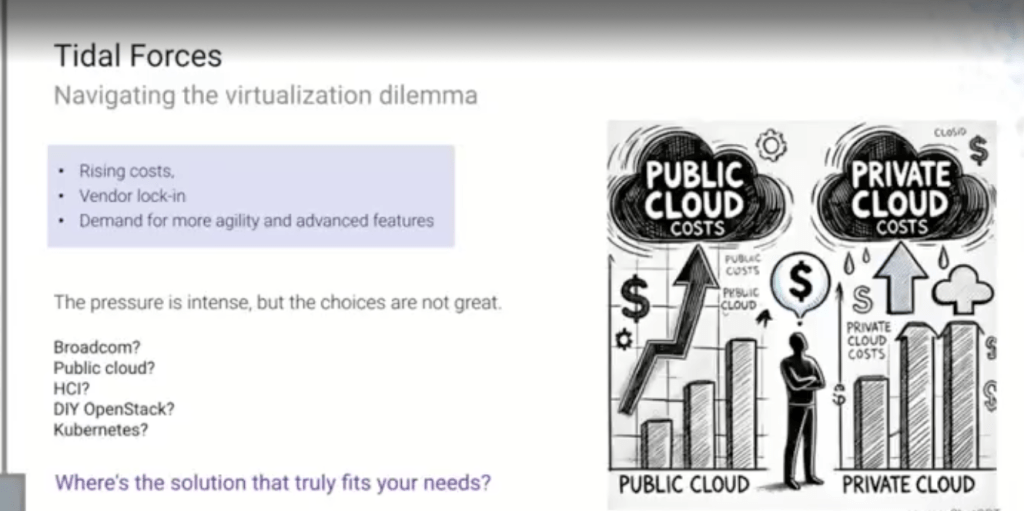
With the changes in broadcom, the challenge for customers is dealing with the higher costs with both the private, and public cloud. Introducing private cloud director:

With PCD you have the ability to build your virtualization clusters, Kubernetes, and networking to help customers figure out how they want to build solutions. This is a direct response to move away from VMware into something else.
Looking at a demonstration with Platform9 PCD to migrate an application. The goal from the demonstration is to move an application while maintaining the database within the central vSphere location. I have to admit this isn’t normally something we see in the field. Most customers when moving the application would move the required database at the same time.

During the demonstration we were shown the different cutover options for data, and availability of the VMs utilized. I normally see these solutions from migration tools, but the granularity of how they are utilized is very refreshing. If these are not set then the default is to happen completely. It’s worth noting the migration demonstration failed because of a data copy, however, it’s also worth noting that the live demo-gods do what they want. I’ve been the guy behind the keyboard trying to build and demonstrate software in front of customers, and when it fails, it tends to fail dramatically.
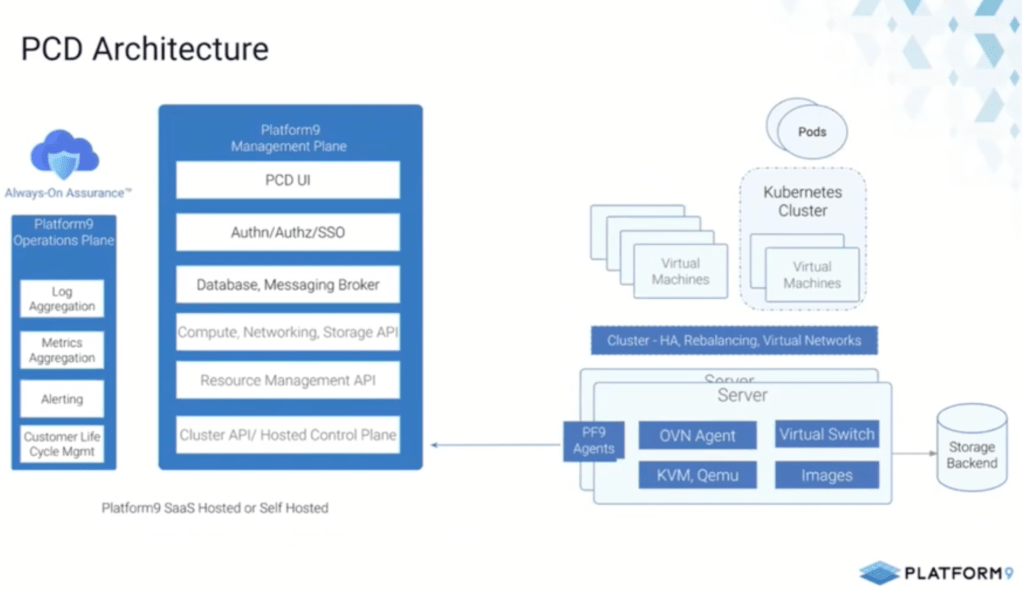
Now looking at the architecture of platform9 PCD the main deployment is SaaS with an agent that calls back to the software. The usage of the self-hosted is limited to the management plane while the other solutions can be utilized outside. The agent can be deployed by normal automation solutions or utilizing manual processes to allow the agent to be installed and deployed.
What about Day 2?
The difference between day 0, day 1, and day 2 is quite large when thinking in the engineering space. Day 0 is large movement and managing the exchanging of data, networking, and compute. Day 1, is the validation and continued exchange. Day 2 is when the migration is complete and the machines are ready to be used in production. Day 2 is normally the day “after” automation, so what can PCD do now?

This graph shows the capability from Platform9 to be able to adjust and manage the solution. When I see this I think of all the k8s startups that don’t make the software, and what it can do, but offer production support.
It’s interesting when coming back to the demonstration both migrations showed completed. Utilizing the application that was migrated the website is still up and running and able to show the cart, and what it has.
As a major point, This was all done with open-source software found here: https://github.com/platform9/vjailbreak if you want to have some fun with your local VMware lab. It’s only able to migrate from VMware to OpenStack, and will probably not add anything more as it moves forward.
Now hearing from the Engineering side of the cluster:
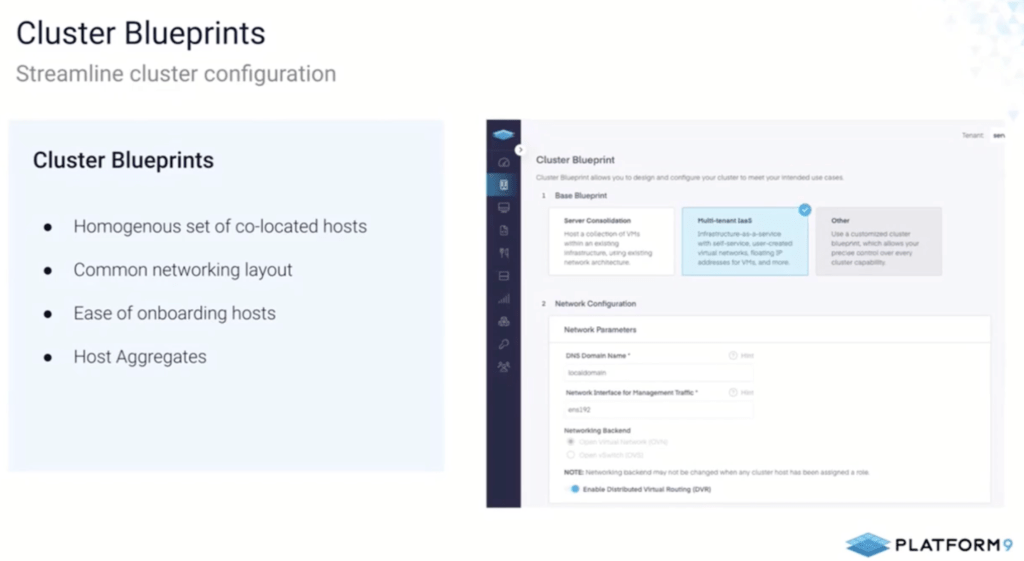
It’s good to mention the callouts on the assumptions here, because that truly shows the ability of the software allowing us to know where we can start. The only hypervisor this is utilizing is with KVM/Qemu which makes sense with their OpenStack platform allowing PCD to be able to grow from the VMware into OpenStack.


With the automation pieces to deploy new VM’s this also fits into the integration for automation. If you are able to automate deployment of the Virtual machine, you have requirements for networking, storage and normally compute sizing (t-shirt sizes like small, medium, large etc.)

For deploying new VMs the basic suspects are all here. cloud-init writing to call and bootstrap the os. Images to define the type of OS and metadata that would be deployed. Flavors to define the size of the Virtual Machines that can be deployed. This all works together to deploy virtual machines as an administrator, and multi-tenancy to support self-service.
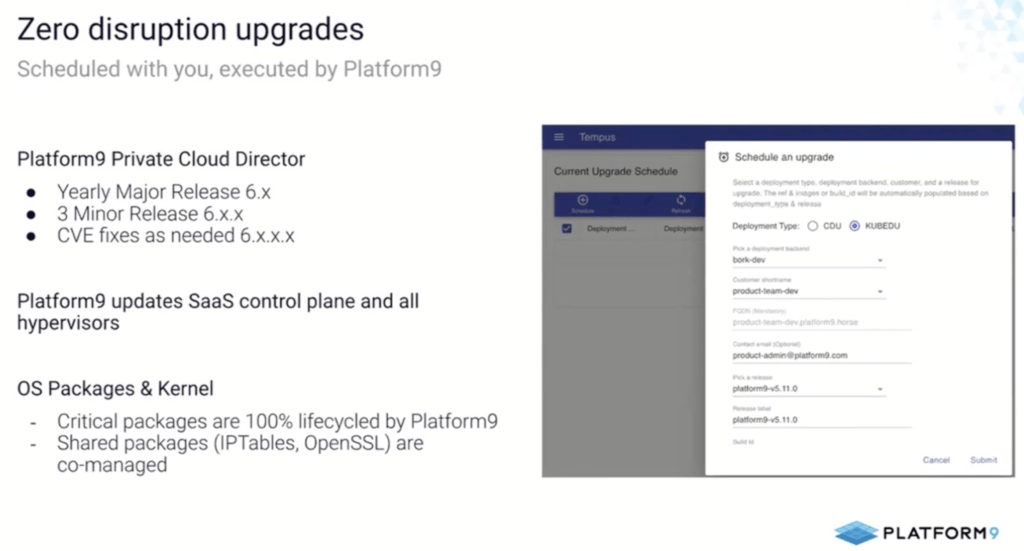
HA and Resource rebalancing is also available as it can support customers who are trying to maintain resources while they also like to sleep. This includes Availability Zones, High Availability, Dynamic Resource Rebalancing, Sophisticated scheduling and more. Allowing users that came from VMware to have a lot of the creature comforts they have used for years on a completely different platform.
Lets talk K8s
PCD makes it easier to manage Kubernetes by keeping the control pane into the SaaS solution allowing PCD to manage the control pane of the solution, this falls into the same policy and solution of their Virtual machine and host where upgrades are the same 2 minor upgrade flex before an update is required to be done. Within the controlled environment for SaaS this also has an opinionated deployment of grafana, and prometheus to manage and maintain their pods and deployments inside an area. The need to migrate between Tanzu and another Kubernetes distribution is a bit more than a CI/CD pipeline from one endpoint to the other, but also internal opinionation that needs to be ripped and replaced between one solution and the other.
Conclusion
Platform9 Private Cloud Director is really a strong headline for Platform9. The issue they are addressing directly is the Broadcom issue that is affection 80-90% of enterprise customers that are utilizing some VMware solution. However, the challenge is going to be how they help customers utilize a new solution that they don’t understand. OpenStack was called out as a VERY high touch solution for enterprise organizations that require their own team. Platform9 is able to fit into that gap and help customers get into OpenStack and support them once in it effectively attacking the large issues customers need to address. The future is bright with this one, and I look forward to see the future from platform9.
 vNerdyNate #vExpert